Market-Leading Brands
From Idea to Icon: How Brands Become Market Leaders
- StriveX Ventures
- 31 / 03 / 2026
A brand earns the position of market leader through clear direction and disciplined execution. The journey from idea to icon is built on understanding a real need, delivering something better than competitors, adding value and scaling without losing focus.
The brands that lead their markets are the ones that stay relevant, build trust, honour feedback, and adapt with purpose. It is not always the case that these brands are the first to enter the market or that they have no competitors.
Turning an idea into a recognised brand requires more than creativity. It demands strong positioning, effective leadership, team building, and the ability to grow while maintaining quality and identity. Many businesses start with promising ideas but struggle to stand out in crowded markets. The difference lies in how well they connect with their audience and in how effectively they build systems that support long-term growth.
What Defines a Market-Leading Brand?
A market-leading brand is defined by its strong market share and influence over customers. In practical terms, it means the brand has set standards others follow and maintains a loyal customer base, making it a top choice in its category.
A market-leading brand's decisions influence trends and expectations across the industry. Trust plays a central role here; customers rely on the brand for consistent quality and are more likely to return or recommend it to others.
Difference Between Popular Brand and Leading Brand
There is a clear difference between a popular brand and a leading brand. A popular brand may gain attention quickly through marketing or trends, but that attention does not always translate into long-term dominance.
A market leader, on the other hand, sustains its position over time. It combines strong performance with reliability, ensuring that customers continue to choose it even when alternatives are available. Popularity can be temporary, but leadership is built on consistency and long-term value.
What Takes an Idea to Brand Foundation?
Turning an idea into a brand foundation requires clarity and structure, along with consistent action. A strong idea needs direction to become a functioning business. This stage is about shaping the idea into something practical and ensuring it connects with a real audience. A solid foundation makes it easier to scale later.
Need of the Market
Every strong brand begins by solving a clear problem or market gap. Understanding what your target audience struggles with helps shape your product or service in a meaningful way. When the idea addresses a genuine need, it becomes easier to attract and retain customers.
Validate the Idea
Test the idea in the real market before investing heavily. This can be done through small launches, feedback, surveys, or basic research. Validation reduces risk and helps refine the offering based on actual demand.
Define Target Audience
A brand cannot serve everyone. Identifying a specific audience helps tailor messaging, pricing, and delivery, and maximise return on investment (ROI). Knowing who you are targeting ensures your brand speaks clearly and connects with the right people.
Clear Brand Identity
A brand needs a recognisable identity, including its name, logo, tone, and overall message. This creates consistency and makes the business easier to remember. A strong identity sets the foundation for future marketing.
Simple Business Model
A clear plan for how the business will operate and generate revenue is essential. This includes cost structure and delivery method. A simple and workable model ensures the idea can function as a real business.
Deliver a Minimum Viable Offering
Start with a basic version of your product or service, then work toward perfection over time. This allows you to enter the market quickly, learn from real customers, get reviews and feedback, and improve over time. Early delivery builds practical experience.
Establish Consistent Systems
At an early stage, having simple systems for communication and customer handling is important. These systems create reliability and prepare the brand for growth.
Build Trust
Delivering on promised services or products, providing high-quality products, and offering professional customer support help build credibility. Early trust lays the groundwork for long-term loyalty and brand reputation.
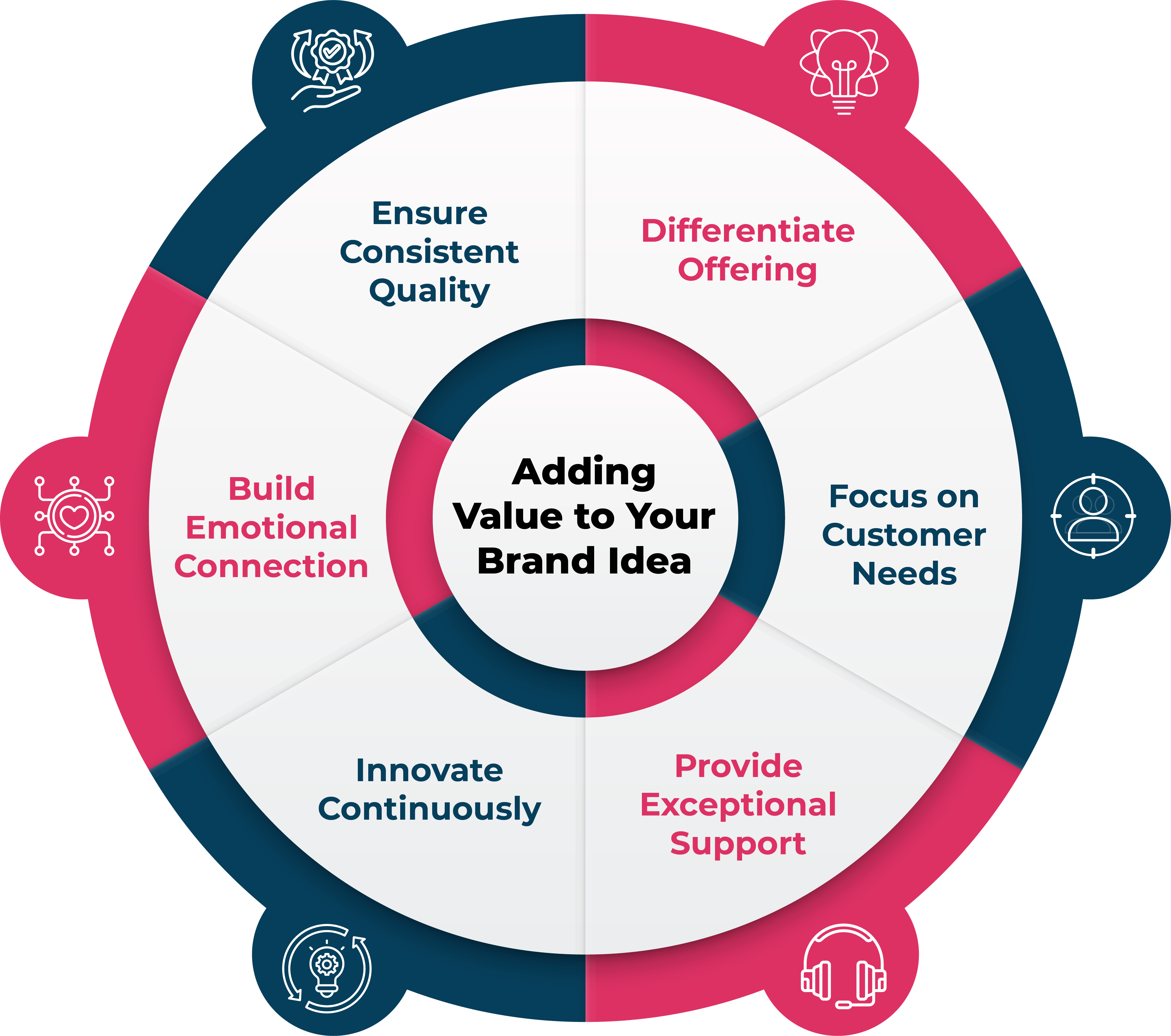
How Can You Add Value to Your Brand Idea?
Adding value to a brand idea is what transforms it from a simple product or service into a memorable, market-relevant brand.
Focus on Customer Needs: Understand what your audience truly wants and modify your services to meet those needs. Brands that listen and respond effectively create products and services people actually rely on, making your idea inherently more valuable.
Differentiate Your Offering: Identify what makes your idea unique compared to competitors. Highlight a clear advantage such as quality, convenience, price, or innovation to make your brand stand out and encourage customers to choose it over alternatives.
Ensure Consistent Quality: Reliability builds trust. By consistently delivering high-quality products, services, or experiences, your brand becomes dependable. This will increase perceived value and strengthen loyalty over time.
Build Emotional Connection: Value is linked to emotions. Connecting with customers on a personal level through your brand story or experiences creates lasting impressions and a deeper relationship with your audience.
Innovate Continuously: Adding value requires keeping your brand relevant. Introduce new features, services, or improvements that enhance the customer experience. This keeps your brand ahead of competitors in both perception and performance.
Provide Exceptional Support: Customer support is part of the brand experience. Quick, helpful, and empathetic support adds value by making customers feel cared for and confident in choosing your brand repeatedly.
The Journey from Idea to Identity
Discover brands that started as ideas and are now establishing their presence in the market.
Discover Our Brands
What is the Role of Leadership in Brand Growth?
Leadership plays a crucial role in transforming a brand from a promising idea into a market leader. Strong leaders provide direction, set clear goals, support teams, and define the brand's long-term vision.
Leaders make strategic decisions about growth opportunities, ensuring they align with the brand's objectives. Leadership shapes the culture and capabilities of the team behind the brand. It also ensures that the brand not only meets customer expectations but also adapts to market changes, builds trust, and maintains a competitive edge.
The absence of effective leadership can turn most innovative ideas into a loss of focus, a failure to scale efficiently, or a struggle to create a consistent brand identity.
Final Thoughts
Turning an idea into a market-leading brand takes clear vision, structure, strong leadership, long-term goals, and consistent action. Delivering value and adapting to change are key to lasting success. Brands that focus on these principles grow efficiently, build trust, and become icons in their market.