Why Powerful Brand Narratives Matter in Competitive Markets?
In competitive markets, products and services often appear similar. Features can be replicated, pricing can be adjusted, and technology evolves quickly. What becomes difficult to copy is meaning. A powerful brand narrative creates distinction where functional differences are limited.
Differentiation
When competitors offer comparable quality and pricing, differentiation must come from positioning. A clear narrative communicates what the brand stands for, who it serves, and why it matters. This deeper positioning sets the brand apart from competitors that compete only on features.
Customer Trust
A consistent narrative builds credibility over time. When your brand narrative aligns with actions and the customer experience, trust strengthens. Trust reduces hesitation in purchasing decisions and encourages repeat engagement.
Emotional Connection
Customers gravitate towards brands that reflect their identity, values or aspirations. A powerful narrative creates emotional resonance, turning one-time buyers into long-term advocates.
Increased Brand Recall
In saturated markets, attention is limited. A well-defined narrative improves memorability by giving audiences something meaningful to associate with it. This strengthens brand preference in the long run.
Internal Strategic Alignment
A powerful narrative guides internal teams, while also influencing customers. It clarifies direction, shapes communication, and supports consistent decision-making. In fast-moving markets, that clarity becomes a competitive advantage.
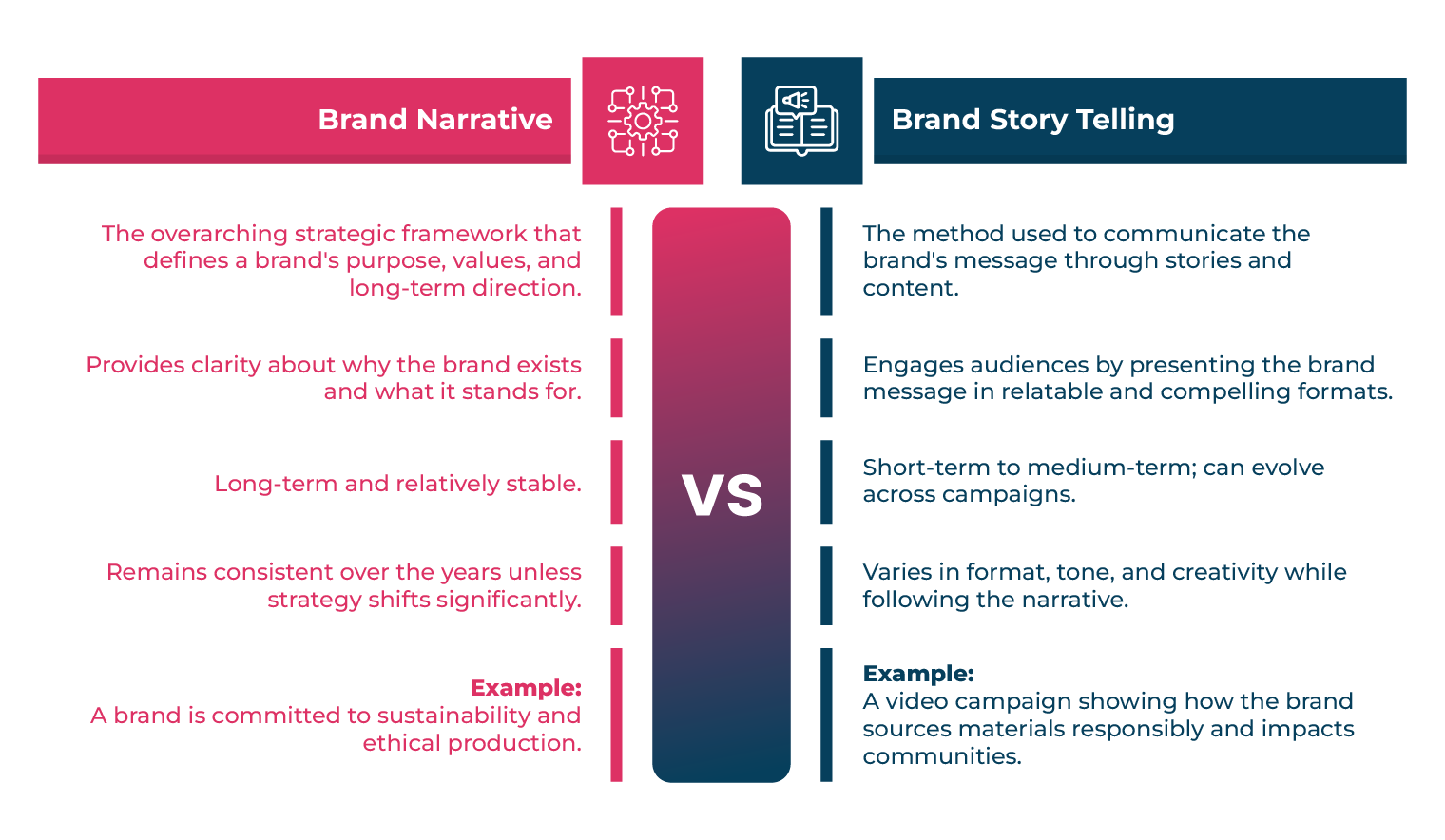
How Is a Brand Narrative Different from Brand Storytelling?
Brand narrative and brand storytelling are often used interchangeably, but they are not the same. They are closely connected and serve different strategic purposes.
What are the Common Mistakes Made When Building a Brand Narrative?
Building a brand narrative requires clarity. Many organisations weaken their positioning by making avoidable mistakes in developing a clear brand narrative. Common mistakes include:
- Organisations confusing a mission statement with a complete brand narrative at the startup level, without defining purpose, audience, conflict, and transformation clearly.
- Organisations explaining their services rather than placing the customer at the centre of the story.
- Vague or overly complex language makes the message difficult to understand or repeat.
- Creating inconsistent messaging across websites, social media, advertising, and customer experience touchpoints.
- Following industry trends without aligning them to the brand's core identity and long-term direction.
- Failing to ensure internal teams embody the narrative before communicating it externally.
- Overpromising in messaging while delivering an experience that does not match the stated values or positioning.
- Changing direction too frequently, which prevents the narrative from gaining long-term recognition and trust.
Avoiding these mistakes strengthens credibility and ensures the brand narrative becomes a strategic foundation.
Learn How Iconic Brands Tell Their Story
Join the StriveX Community to explore and refine narratives that shape market-leading brands.
Be a part of StriveX Community
Conclusion
Enduring brands are built on meaning and relatability. In competitive markets, a powerful narrative becomes the true differentiator. It clarifies why a brand exists, who it serves, and the transformation it promises. A well-defined brand narrative guides internal decisions, ensuring communication, culture, and customer experience remain aligned. Organisations that invest in shaping and protecting their narrative build brands capable of enduring beyond trends and market shifts.