Data Driven Strategy
Data-Driven Brand Decisions: Turning Insights Into Growth
- StriveX Ventures
- 08 / 04 / 2026
Data-driven brands make decisions based on the quantitative and qualitative data that guide business choices and improve performance. Brands use data to identify growth opportunities. This approach helps businesses make informed decisions that are more likely to succeed.
When this data is analysed correctly, it improves marketing strategies, enhances customer experience and supports product development. Turning data into meaningful insights is what drives real value. This blog explains how brands can use data effectively to make better decisions and achieve consistent growth.
Why Data-Driven Decisions Matter for Brands??
Data-driven decisions are based on facts and help drive growth for a brand. Using real-time data to understand what works and what does not improve planning accuracy. This reduces risk and enables brands to make more confident decisions based on clear evidence.
Using data also leads to a better return on investment (ROI), deeper customer understanding, and improved overall performance. Brands can track how customers behave, what they prefer, and how they respond to different strategies. This makes it easier to allocate resources effectively, improve campaigns, and deliver products or services that meet customer expectations.
Core Data Categories Every Brand Should Track for Growth
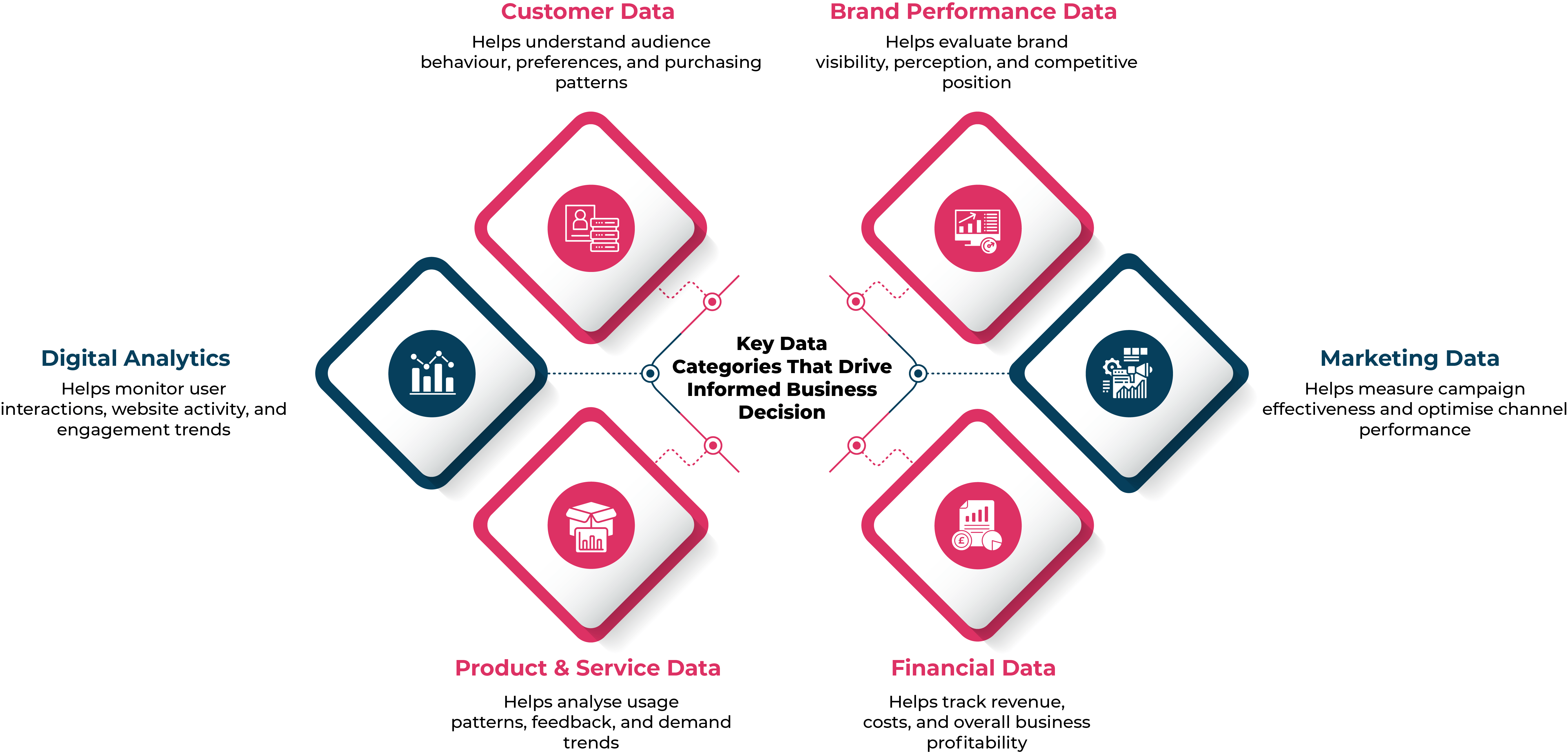
There are multiple types of data available, which provide different perspectives. Tracking the right types of data helps brands make informed decisions and improve performance across all areas. A complete analysis of data provides insight into how the business is performing and where it can grow.
Customer Data
Customer data helps brands interpret their audience behaviour. Demographics and preferences show what customers need and expect, while purchase patterns and engagement levels reveal how often and why they interact with the brand. This insight allows businesses to tailor their offerings and communication more effectively.
Brand Performance Data
Brand performance data measures how the brand is perceived and positioned in the market. Metrics such as brand awareness, recognition, recall, Net Promoter Score (NPS) and share of voice indicate how visible and memorable the brand is relative to competitors. These indicators help assess whether branding efforts are reaching the right audience. Perception and sentiment analysis reveal how customers feel about the brand, including trust and reputation.
Digital Analytics
Digital analytics tracks how users interact with your online presence. Website traffic, conversion rates, social media engagement, and user journeys can be monitored using different analytical tools to understand behaviour and improve performance.
A/B testing can also be applied to campaigns to validate effectiveness, helping brands make decisions based on real user behaviour rather than assumptions.
Marketing Data
Marketing data focuses on how well campaigns and channels perform. Metrics such as click-through rate (CTR), conversions, and impressions help brands evaluate the effectiveness of their campaigns. This data shows what strategies are driving results and where improvements are needed.
Channel effectiveness highlights which platforms deliver the best outcomes. By analysing this data, brands can allocate resources more efficiently and optimise their marketing efforts for better results.
Learn the Difference Between Community-Led Growth vs. Traditional Marketing.
Product and Service Data
Product and service data provides insight into how offerings perform in the market. Usage patterns show how customers interact with a product or service. Customer feedback identifies the areas for improvement. This helps brands refine their offerings to better meet customer needs.
Demand trends indicate which products or services are growing in popularity and which are declining. This information supports better decision-making in product development, pricing, and inventory management.
Financial Data
Financial data helps brands measure overall business performance and sustainability. Revenue, budgeting, costs, and profit margins indicate the financial health of a business. These metrics are essential for making strategic decisions about growth and investment.
How to Turn Data into Actionable Business Insights
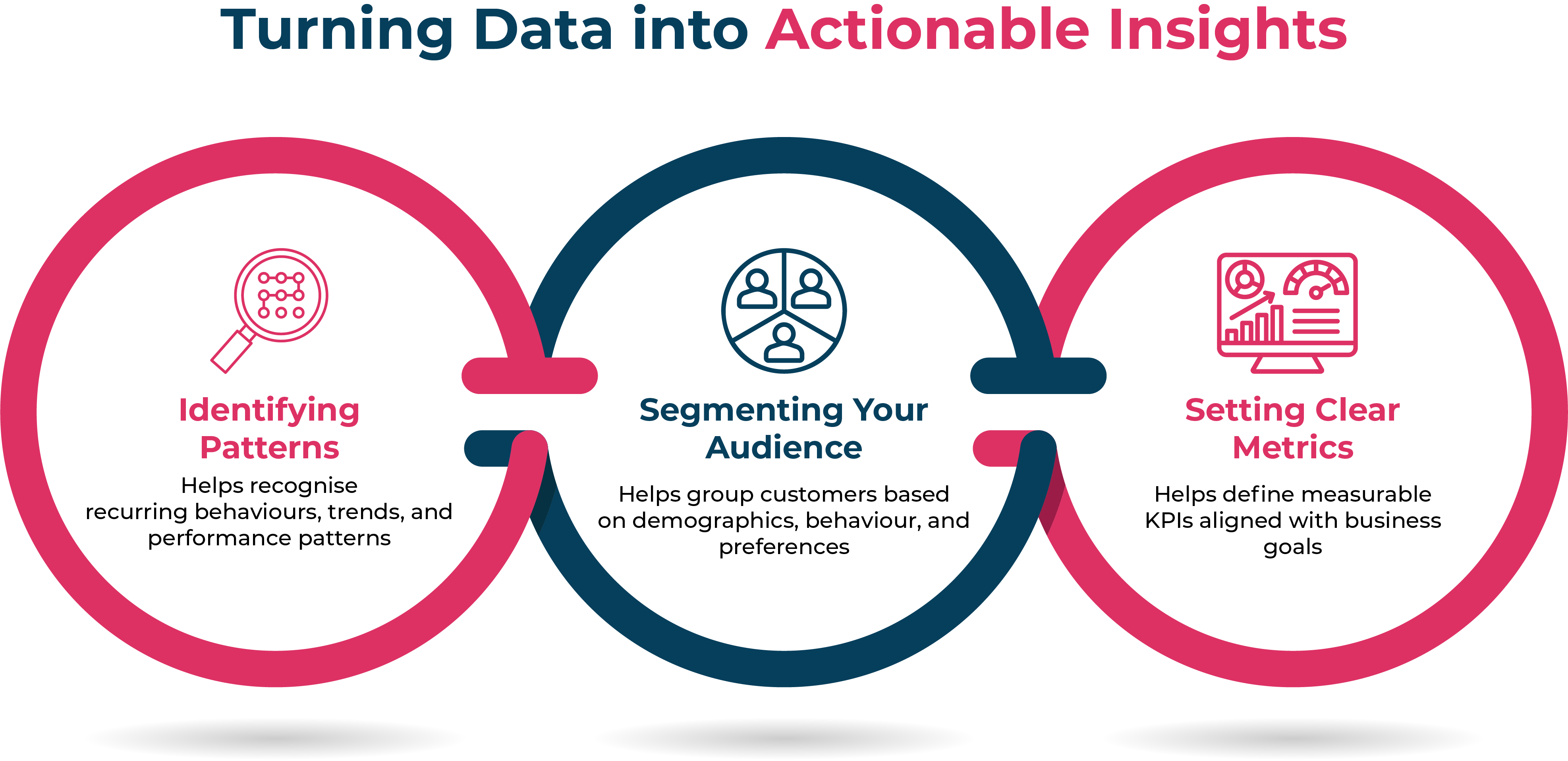
Raw data on its own has limited value unless it is analysed and applied strategically. By examining trends, segmenting audiences, and setting clear performance metrics, businesses can take concrete steps that directly impact results.
Identifying Patterns
Recognising repeated behaviours or outcomes in your data helps uncover what is driving customer actions. For example, tracking which products sell the most during certain periods or identifying content types that generate high engagement allows brands to focus on strategies that work.
Spotting opportunities and risks becomes easier once patterns emerge. Trends may indicate new customer needs, untapped markets, or potential problems that require attention. Identifying repetitive patterns can make a brand more proactive in decision-making.
Discover more about Why Building a Community Around Your Brand Matters?
Segmenting Your Audience
Grouping customers based on preferences or demographics allows brands to tailor their strategies effectively. Segmentation ensures that messaging, promotions, and product recommendations reach the right audienc.
Personalising strategies for each segment increases engagement and conversions. Customers are more likely to respond positively when brands understand their unique needs and offer solutions that feel customised creating a brand community. This approach strengthens loyalty and long-term value.
Setting Clear Metrics
A brand should identify key performance indicators (KPIs) that measure results meaningfully, such as conversion rates, retention rates, or customer satisfaction scores.
Aligning metrics with business goals ensures that data insights support strategic objectives. Every decision, campaign, or product update can then be evaluated against these metrics, helping the brand stay focused, accountable, and results-driven.
Read more: How Brands Become Market Leaders?
What are the Common Challenges Faced in Data-Driven Decision Making?
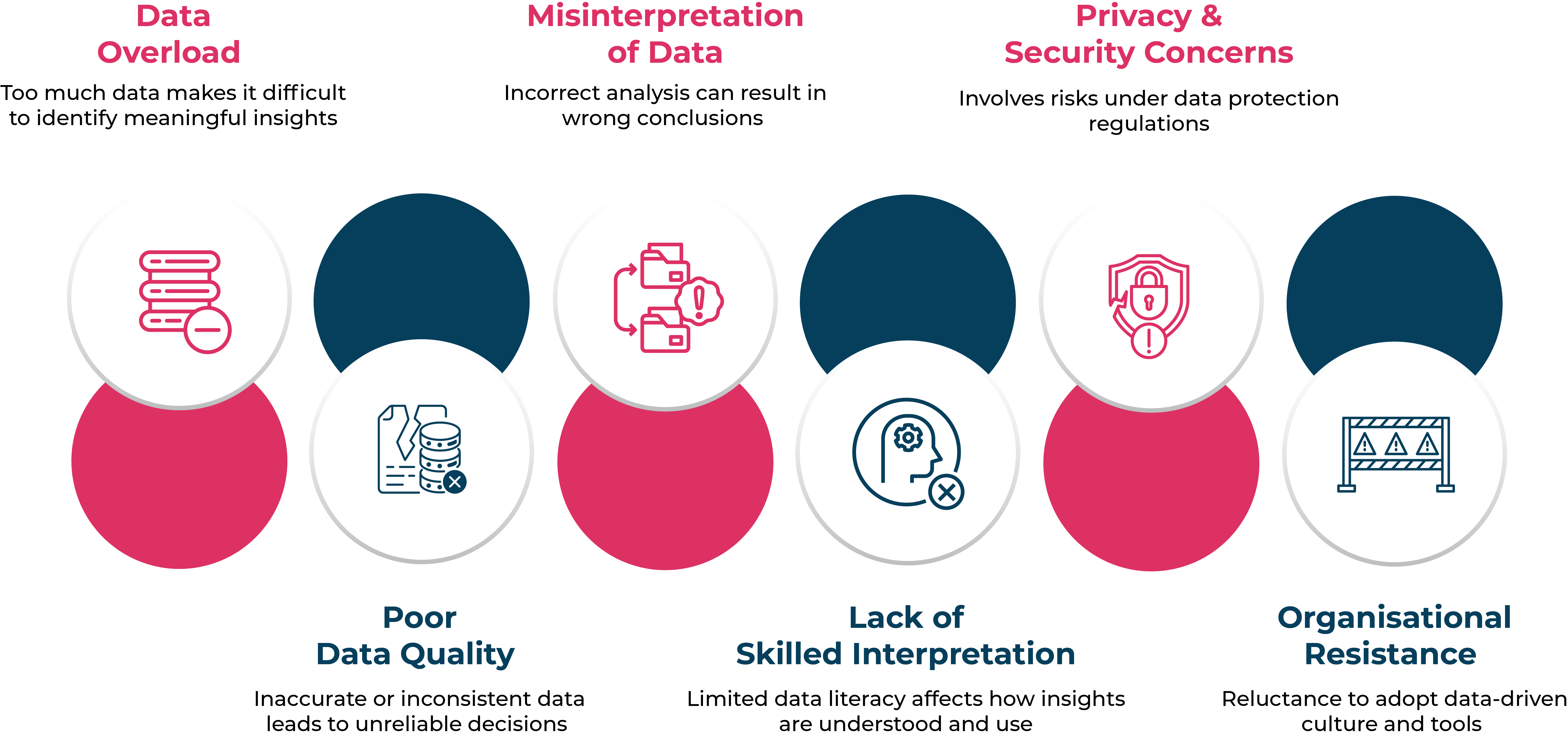
While data-driven decisions offer clear advantages, several challenges can prevent brands from using data effectively. The following are a few challenges a brand can face while making data-driven decisions.
Data Overload: Brands often collect more data than they can meaningfully use. Without clear direction, this abundance can overwhelm teams and obscure critical insights. Prioritising data that directly relates to business objectives helps brands avoid noise, make quicker decisions, and allocate resources effectively.
Poor Data Quality: Inaccurate or inconsistent data can lead to misguided decisions. Brands relying on unreliable sources risk making choices that harm performance or customer trust. Ensuring reliable data requires validation processes, regular audits, and trustworthy sources. High-quality data forms the foundation for accurate insights and confident decision-making.
Misinterpretation of Data: Even accurate data can be misused if analysed without context. Wrong conclusions can result from ignoring underlying patterns, seasonality, or external factors. The bigger picture must be considered to ensure insights reflect reality and support the right business strategies.
Lack of Skilled Interpretation: Data scientists can uncover patterns and trends, but business leaders may misinterpret the results. Over-reliance on dashboards or raw reports without context can lead to decisions that do not align with business goals. Teams should enhance data literacy and collaborate with analysts and decision-makers. This ensures insights are understood correctly and applied strategically.
Privacy and Security Concerns: Collecting and analysing customer data carries regulatory risks, including those under the General Data Protection Regulation (GDPR) and local data protection laws. Data breaches or misuse can severely damage brand reputation and trust. Strong compliance policies and cybersecurity measures must be implemented. Protecting customer data is essential not just legally, but also for maintaining credibility and loyalty.
Organisational Resistance: Some leaders may rely on intuition rather than data. Employees may resist adopting new tools or workflows. Cultural barriers can slow the implementation of data-driven practices. A data-first culture must be promoted to deal with this challenge. Encouraging adoption and demonstrating the value of data helps overcome resistance and strengthen decision-making.
Turn Insight into Market Leadership
Discover how leading brands translate insights into authority, scale, and sustained competitive advantage.
Explore the Leadership Framework
Final Thoughts
Data-driven decision-making allows brands to move with clarity rather than assumptions. By using the right data, focusing on meaningful insights, and aligning decisions with clear goals, businesses can improve performance and reduce risk. It also helps brands stay relevant, respond to customer needs, and make informed choices that support steady growth. The value of data depends on how well it is interpreted and applied. Brands that combine accurate data with strong judgement, clear strategy, and a culture that supports data use are more likely to achieve consistent and sustainable growth.