About Us
Empowering innovation across sports excellence and personalisation.
- 27 Lichfield Road, Dagenham, England, RM8 2AT
Growth in the business world is about connecting people with your brand. It involves building community and increasing visibility. There are two main growth pathways that take distinctly different approaches to reaching audiences. These methods are community-led growth and traditional marketing.
Community-led growth focuses on building relationships and trust, while traditional marketing relies on campaigns that expand reach through structured messaging and email communication. Understanding how each model works and where it falls short helps businesses choose a growth strategy that aligns with their goals, resources, and audience behaviour, instead of blindly following trends.
A growth strategy provides direction and clarity to an organisation. It helps leaders decide where to invest their time and money. A clear strategy supports consistent growth and is grounded in informed decision-making.
A well-defined growth strategy supports long-term stability. It allows an organisation to anticipate market changes, respond to customer needs, and stay competitive. Most importantly, it aligns teams around shared goals, ensuring that daily actions contribute to sustainable progress rather than short-term wins.
Community-led growth helps businesses build genuine relationships with their audience. This approach directly connects businesses with the people who use and support their products and services.
Instead of focusing mainly on reach or impressions, it centres on trust, participation and a shared sense of belonging. A brand grows when people feel valued and connected to the brand.
Community-led growth emerges through forums, online groups, events, or member communities where people can interact. Customers are encouraged to share feedback, ideas, and experiences, often shaping how the product or service improves. User-generated content, referrals, and word-of-mouth become natural outcomes of this involvement. Customers turn into advocates who actively support and promote the brand because they feel part of its growth.
Traditional marketing relies on conventional strategies such as planned campaigns, controlled messaging, and email marketing. This includes paid advertisements, promotional campaigns, sales funnels and media placements such as TV, print, radio, or online ads.
The main focus of traditional marketing is on visibility and driving immediate conversions rather than long-term engagement. Traditional marketing focuses on delivering messages to large audiences in a structured and measurable way. This approach works best when a brand needs rapid awareness or wants to make a strong first impression. Its structured nature makes it scalable and predictable, allowing businesses to plan budgets and measure outcomes efficiently. Despite the rise of community-focused strategies, many companies continue to use traditional marketing because it delivers fast visibility and clear, short-term returns.
Community-led growth and traditional marketing differ in their approaches and levels of customer involvement. While one focuses on building long-term relationships and shared value, the other prioritises faster outcomes. The following outlines the key differences and limitations of each model, helping organisations assess which approach aligns better with their goals and capabilities.
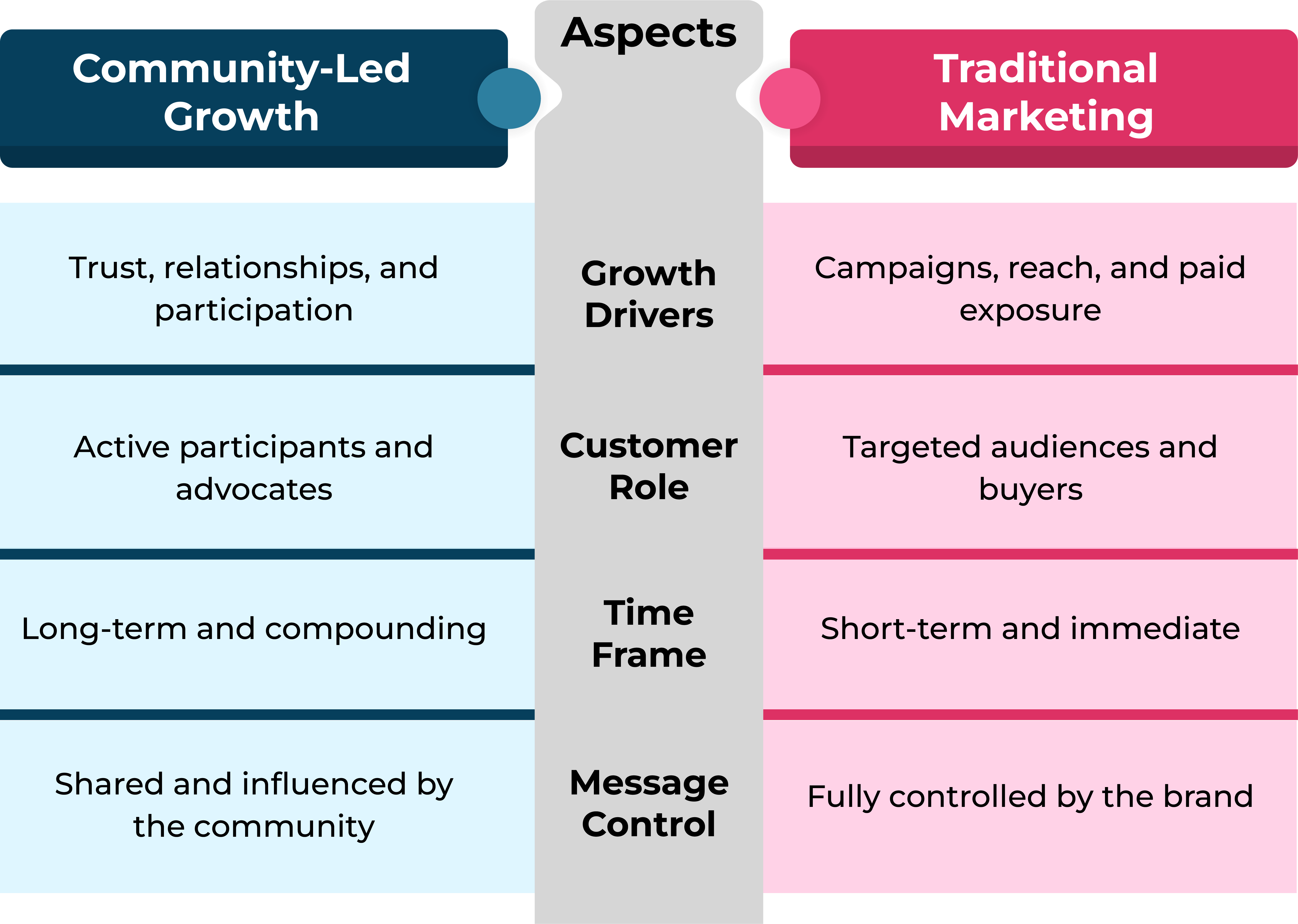
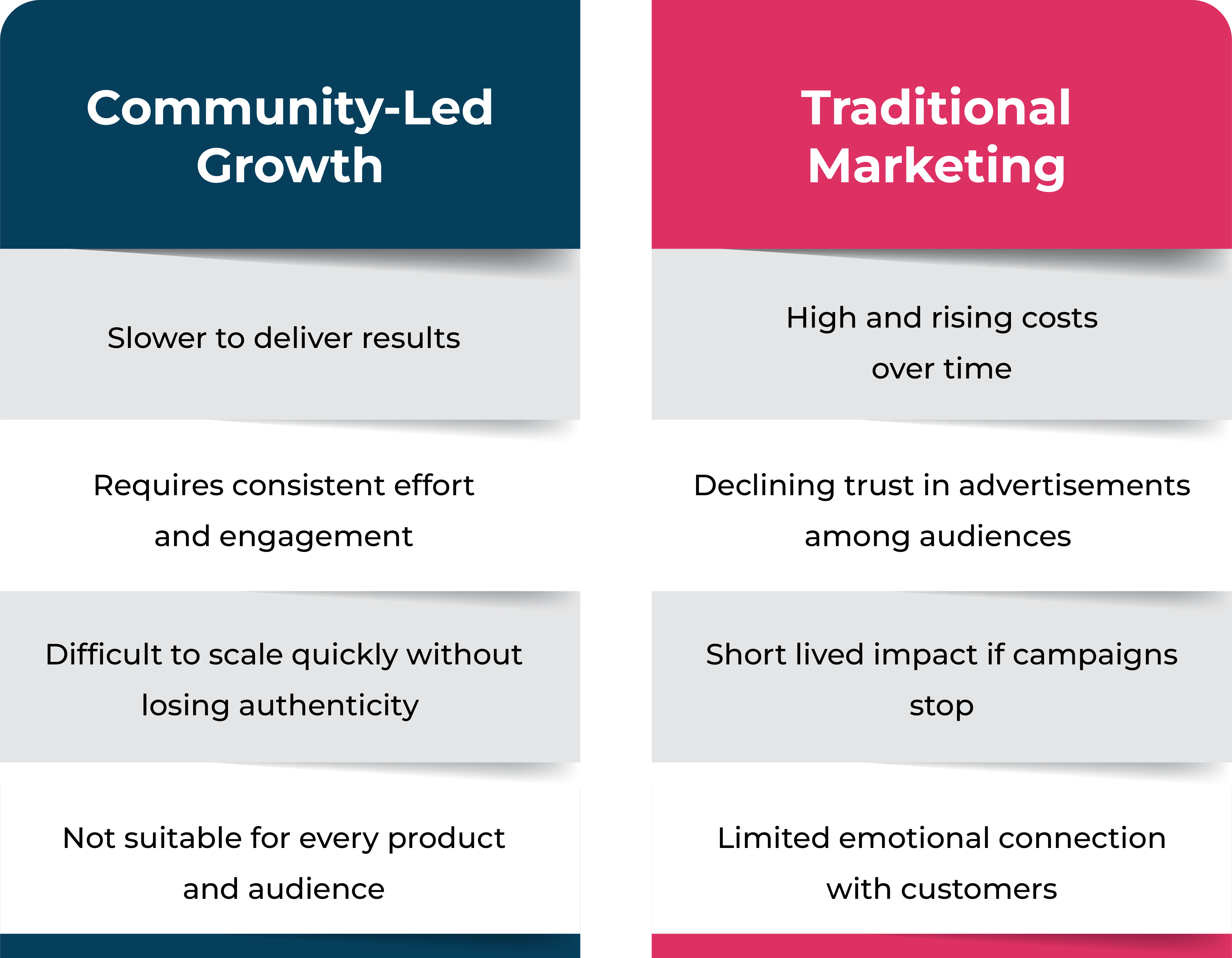
The best option that works for your brand depends on how it operates, who it serves, and what you can realistically sustain. Observe your audience and analyse their values. If they prefer shared experiences, then a community-led approach will work. Brands built around learning, lifestyle, or niche interests often benefit from this model. If your audience is more transactional or time-sensitive, traditional marketing may deliver faster results.
If you want awareness of your brand, traditional marketing will do the job. This requires a budget and a structured execution plan. Ultimately, growth depends on whether you are willing to invest effort over time or need immediate visibility.
The best choice will be the one that supports your brand's direction and capacity without forcing an approach that cannot be maintained.

Community-led growth and traditional marketing offer valuable ways to grow a brand. Both methods promote growth, but they serve different purposes. Community-led growth builds trust, loyalty and long-term engagement, while traditional marketing delivers speed, visibility and measurable reach. The right choice depends on your audience, resources, and business goals. When used thoughtfully, either approach, or a combination of both, can help a brand grow with clarity, consistency, and purpose.