

Expanding into emerging markets offers strong growth potential for a business. For this expansion, it is important to consider how adaptable your products are. Emerging markets differ in income levels, infrastructure, cultural preferences, and buying behaviour, which makes a standard product approach less effective. Businesses that adjust their products to fit these conditions are more likely to gain acceptance and build long-term value. This blog explains practical strategies that help businesses adapt their products effectively, reduce risk, and grow in emerging markets.
Emerging markets are defined by their strong growth potential. These markets have improving infrastructure, increasing foreign investment, and a growing workforce.
Emerging markets mainly refer to countries or regions that are experiencing rapid economic development and industrial growth but have not yet reached the level of fully developed economies. These developing economies often show rising income levels and consumer demand. One of their key characteristics is the growth of a middle class that spends on products and services.
Emerging markets support global expansion by offering growth opportunities that are often limited in saturated markets. These markets provide access to new customers and expanding industries. This makes them attractive for businesses looking to scale.
They also offer long-term potential. As these markets continue to develop, early entry allows businesses to build brand presence, establish trust, and gain a competitive advantage.
Product adaptation means modifying an existing product to meet the needs and preferences of a specific customer group. Instead of offering the same product everywhere, businesses adjust features to match local expectations.
Consumers in many emerging markets tend to be price-sensitive and value-driven, which means their purchasing decisions are influenced by affordability and practicality. Adaptations can include simple changes, such as altering packaging size for affordability, or more significant adjustments, like redesigning a product to suit local climate, culture, or infrastructure. The goal is to make the product more relevant and useful to the target market, thereby increasing acceptance and success rates.
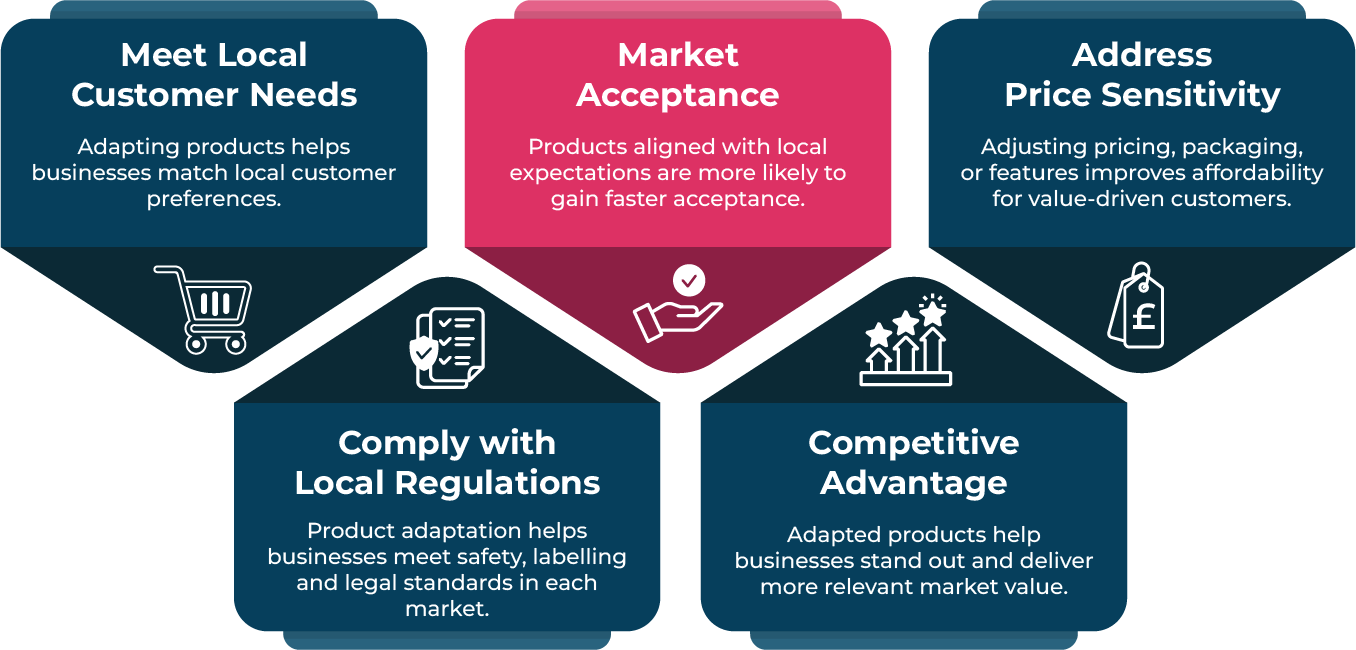
Product adaptation is essential for businesses entering new or diverse markets because it ensures relevance. The following key areas explain why adaptation is necessary:
Customer preferences and expectations vary across markets. Adapting existing products for a new market helps ensure they fit how customers actually use them.
A product that aligns with local expectations is more likely to be accepted quickly. Adaptation increases the chances of success in new markets.
In many markets, affordability plays a major role in purchasing decisions. Most customers in these markets seek price-sensitive, value-driven products. Adjusting pricing, packaging, or features helps make products accessible to a wider audience.
Different markets have different legal and regulatory requirements. These can include safety standards, product certifications, labelling rules, import restrictions, and quality checks. Adapting products ensures they meet these local standards. This maintains credibility and trust with both regulators and customers.
Adapting products allows businesses to stand out by offering solutions that competitors may overlook. Customising products according to market demand allows a business to fill gaps and deliver more relevant value. This helps the business secure a stronger position in the market and supports steady, long-term growth.
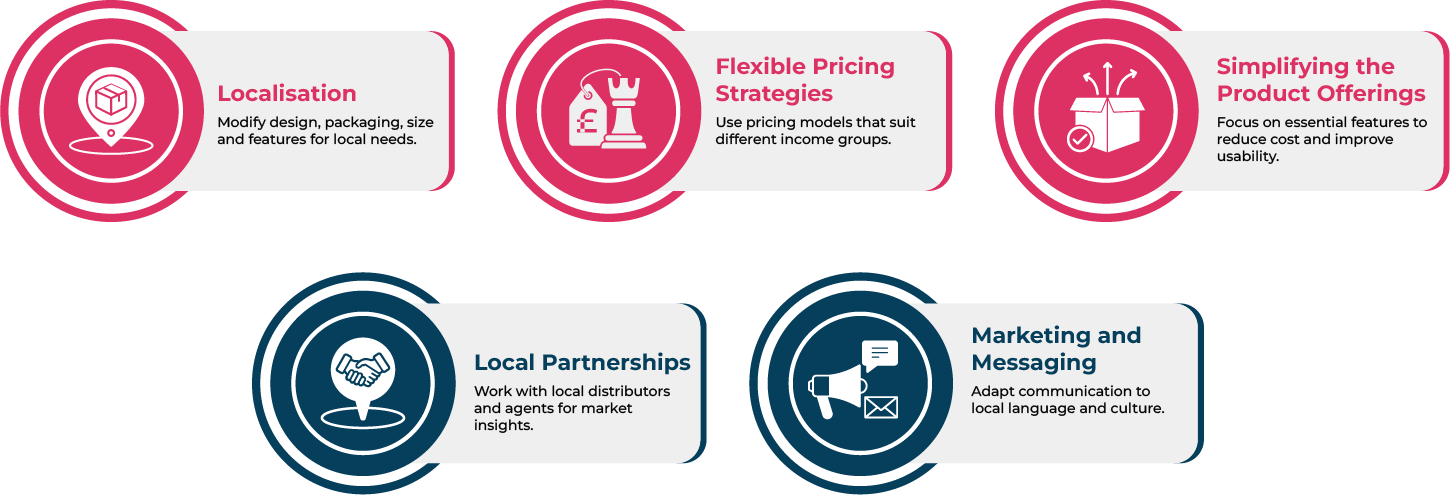
Successful product adaptation depends on applying the right strategies that align the product with local market conditions. These strategies help businesses improve relevance, accessibility, and acceptance.
Localisation involves modifying product features and design to match the specific needs of a target market. The goal is to make the product feel natural and practical for local users.
It also includes changes in packaging, size, and overall presentation. For example, smaller packaging may suit price-sensitive markets, while design adjustments may improve usability based on cultural or environmental factors. These small but important changes can significantly improve customer acceptance.
A flexible pricing strategy ensures that products remain accessible to different income groups within a market. Businesses often use tiered pricing models, smaller product units, or subscription-based options to make their offerings more affordable while still maintaining value.
The key challenge is balancing affordability with profitability. Pricing must reflect local purchasing power without compromising business sustainability. When done correctly, flexible pricing helps expand customer reach and increase market penetration.
To succeed in a specific market, unnecessary and complex features must be removed from a product. In many emerging or diverse markets, customers prefer practical, easy-to-use solutions rather than highly advanced features they may not need or understand.
By focusing on core values, businesses can reduce production costs and improve user experience. A simplified product is often easier to market, adopt, and align with the actual needs of the customer base.
Local partnerships play a crucial role in understanding and entering new markets. Working with local distributors, suppliers, or agents helps businesses gain valuable insights into customer behaviour, regulations, and market dynamics.
These partnerships also build trust, as local partners often have established relationships and credibility. This can improve distribution efficiency, reduce entry barriers, and increase the chances of long-term success in the market.
Adapting marketing and messaging ensures that communication resonates with the local audience. This involves using appropriate language, cultural references, and communication styles that align with local values and expectations.
It also includes positioning the product in a way that reflects what matters most to customers in that market. When messaging feels relevant and relatable, it strengthens engagement, improves brand perception, and increases the effectiveness of marketing efforts.
Browse StriveX products created to deliver practical value across different
customer
needs.
Coca-Cola has expanded into several emerging markets. The company did not take a standard approach. It has adapted many of its products, pricing, marketing, packaging, and distribution strategies according to market demand.
In many price-sensitive markets, Coca-Cola introduced smaller and more affordable packaging options. The company also focused heavily on local distribution and marketing strategies.
Coca-Cola partnered with local retailers and distributors to improve availability, even in areas with limited infrastructure. Its marketing campaigns were adapted to local languages and cultures, helping the brand connect more effectively with customers.
One of the key lessons from Coca-Cola's approach is that successful expansion into emerging markets requires flexibility and local understanding.
Expanding into emerging markets requires more than simply introducing an existing product to a new audience. A standardised approach can limit growth, while product adaptation improves relevance, accessibility, and customer acceptance. Businesses must adapt their products to local needs and market conditions to achieve meaningful success. Successful businesses focus on flexibility, local understanding, and long-term planning. Businesses that adapt effectively to these markets will be in a stronger position to expand globally and remain competitive.