Empowering innovation across sports excellence and personalisation.
- 27 Lichfield Road, Dagenham, England, RM8 2AT
A successful business needs a strong distribution strategy, not just great products. It is important to clearly define how customers can buy products or access services. A well-planned distribution strategy makes products more accessible. It can also support business growth and improve the overall customer experience.
Direct-to-Consumer (DTC) and retail distribution are two of the most common ways of making products accessible to customers. DTC allows brands to sell directly through their websites, social commerce channels, or other owned platforms. Retail distribution, on the other hand, relies on third-party retailers, wholesalers, or distributors to reach customers.
Choosing the right distribution model can have a significant impact on a business. It can affect sales and profit margins. It can also influence customer relationships and brand control. The right approach depends on a brand's business structure, target audience, resources, and growth objectives.
Direct-to-Consumer (DTC) distribution is a business model in which brands sell products or services directly to customers. Brand manage the sales process without relying on traditional retail intermediaries. This gives businesses greater control over how they market, sell, and deliver products. A DTC business can use several digital channels to reach its target audience. DTC can be implemented through several channels:
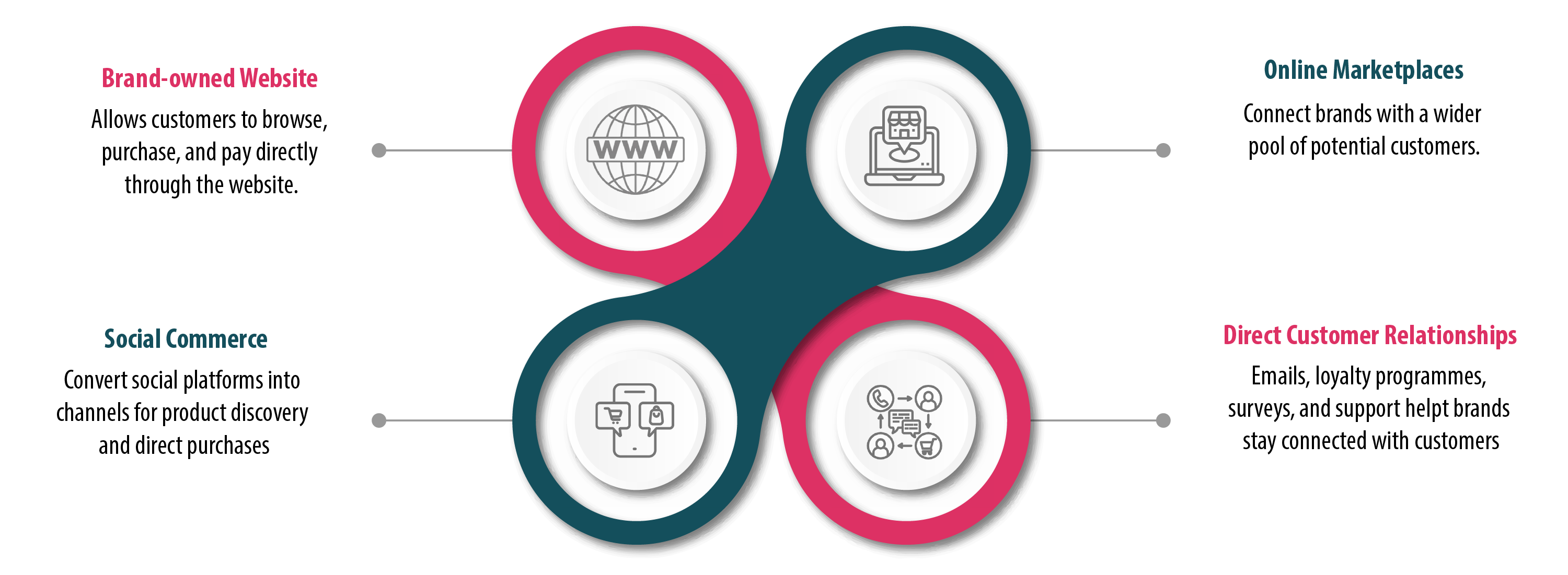
For example, a brand can launch a new product on its website, test different prices, analyse customer responses, and adjust its marketing strategy based on the results. This level of control can make DTC particularly useful for brands still testing product-market fit or developing their market position.
Retail distribution is a sales model in which brands use third-party businesses to reach customers. Brands work with retailers, wholesalers, or distributors to expand their market reach and product availability. Common retail distribution channels include:
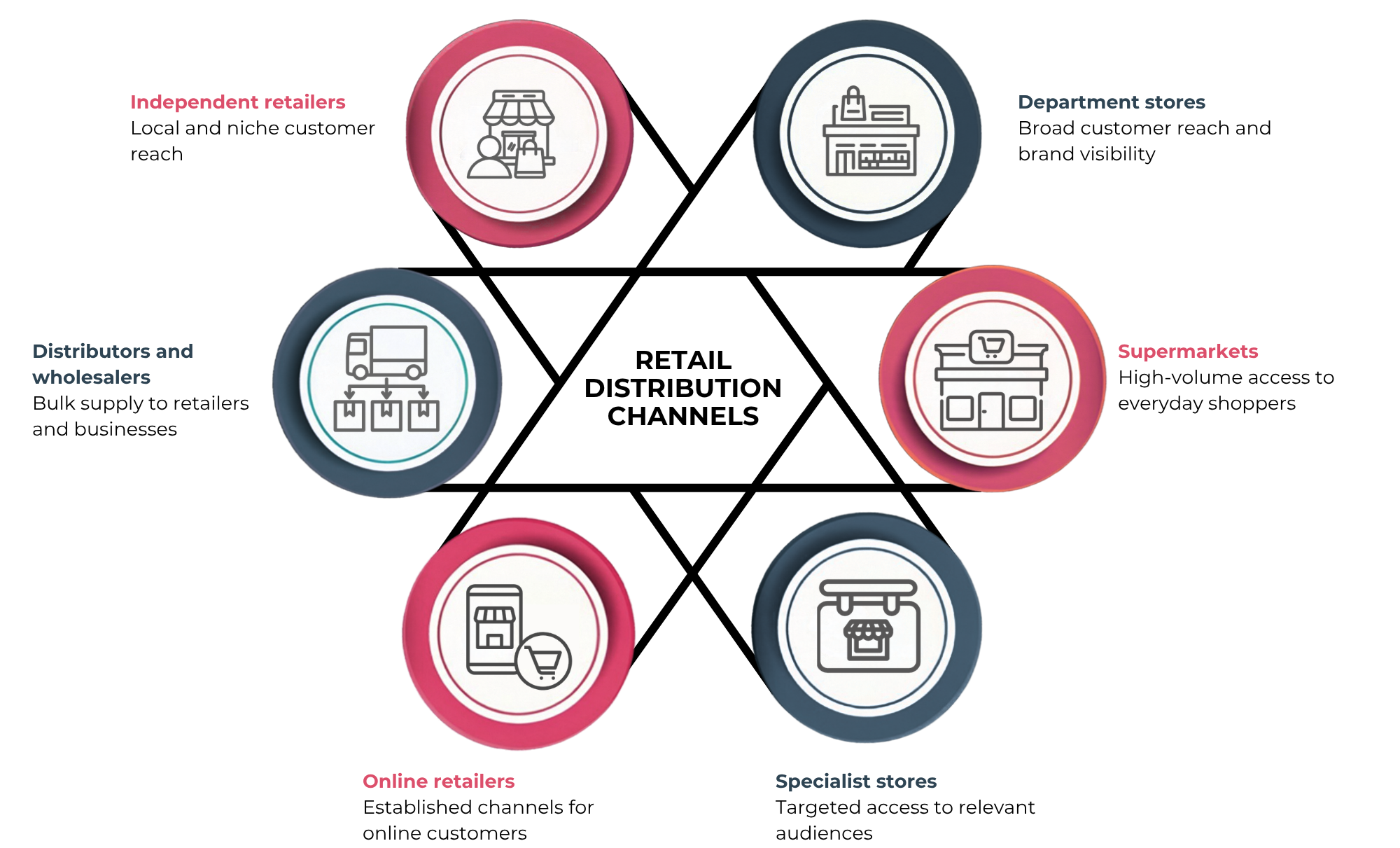
Retail distribution can help brands increase sales, reach new customers, and expand into new markets. However, it may also result in lower profit margins and less control over pricing and the customer experience compared with DTC distribution.
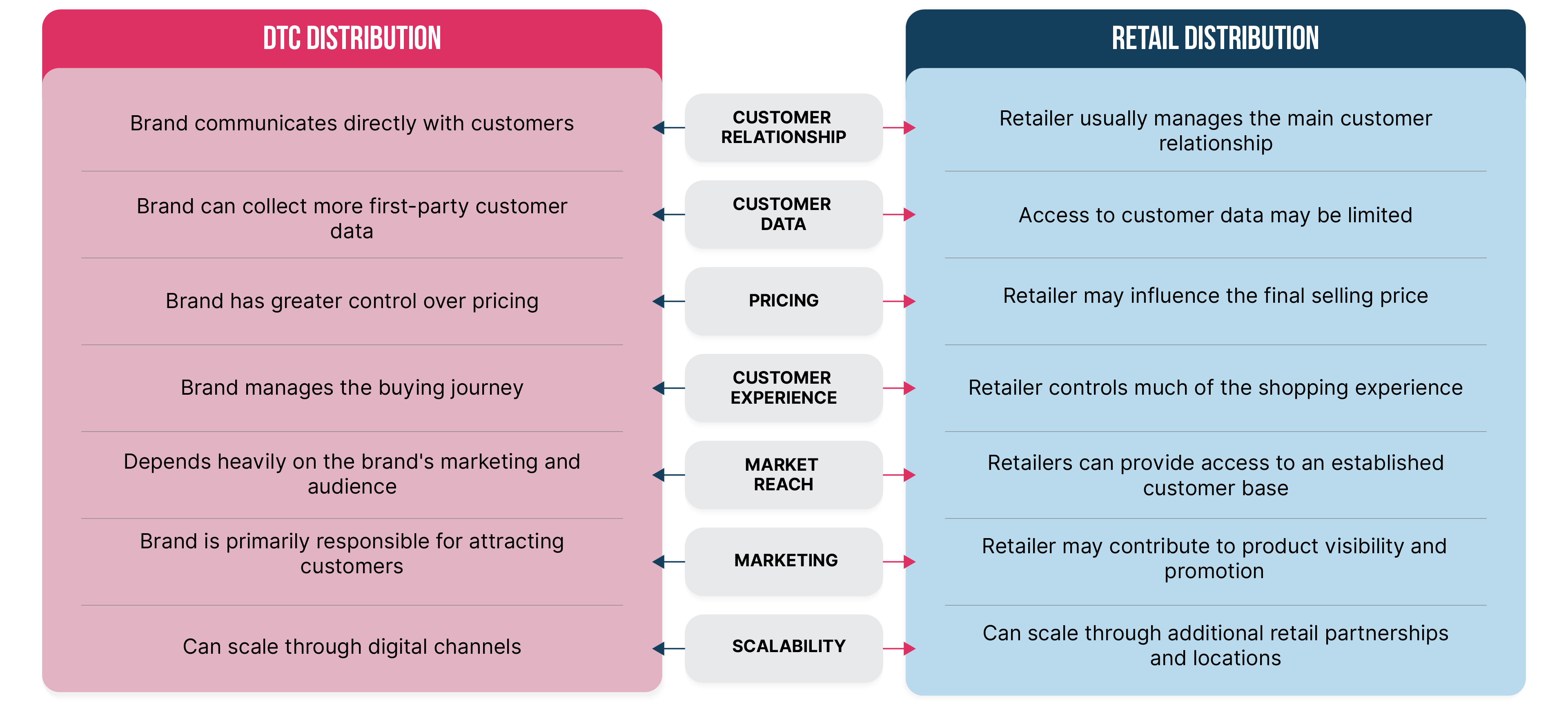
Direct-to-Consumer (DTC) and retail distribution help brands sell products, but they work differently. The main difference is who sells the product to the customer. In DTC, the brand sells directly to the customer. In retail distribution, a third-party retailer, wholesaler, or distributor is involved.
Read more: How Brands Become Market Leaders?
For many new brands, DTC distribution can be a practical starting point because it provides greater control and flexibility. Selling directly through a website or social commerce channel lets brands test product-market fit. They can adjust pricing, messaging, and offers without committing to large retail orders. It also helps brands understand customer behaviour and collect direct feedback before investing heavily in expansion.
DTC can also keep early operations relatively focused. Instead of managing multiple retail relationships, a new business can concentrate on its product, website, marketing, fulfilment, and customer service.
Learn about: Community-Led Growth vs. Traditional Marketing
Early retail partnerships can work well when customers need to see or try a product before buying. These partnerships can also improve local availability and build brand credibility. The right choice depends on the product, target audience, resources, and growth strategy.
Moving into retail can help a growing brand expand its market presence. However, the business should have a strong foundation before taking this step. Look for these signs before moving into retail:
DTC and retail distribution depend on the brand's stage, target audience, resources, and growth goals. DTC can provide greater control, direct customer relationships, and valuable insights, making it a practical option for many new brands.
As demand grows, retail partnerships can help expand market reach and product availability. Brands that are ready to scale can also combine both approaches through an omnichannel distribution strategy. The goal is not to choose one model permanently, but to select the distribution channels that support sustainable growth at each stage of the brand journey.